
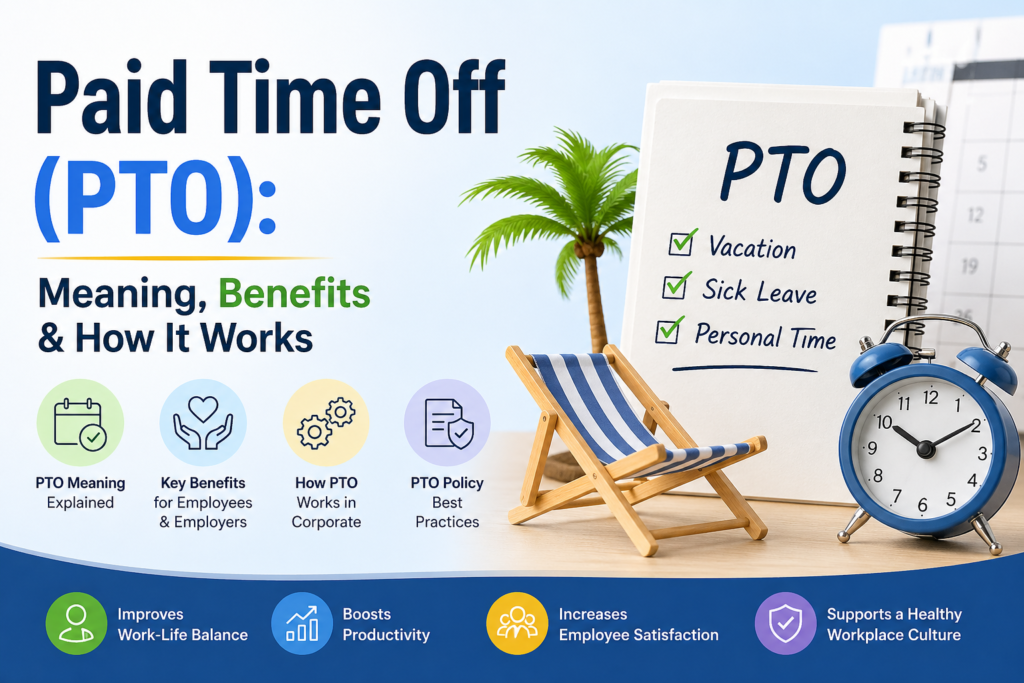
In today’s fast-paced corporate environment, maintaining a healthy work-life balance is more important than ever. One of the most valuable benefits employees receive is Paid Time Off (PTO). But what exactly does PTO mean? How does it work in corporate settings? And why should both employers and employees understand it clearly?
In this detailed guide, we’ll break down everything you need to know about PTO—its full form, meaning, types, benefits, and how it reflects in payroll systems.
Generate your salary pay slip online to keep track of PTO balances and salary details in one place. Payslip Maker Free helps you manage leave records and create accurate payroll documents instantly.
What is PTO? (PTO Full Form & Meaning)
PTO full form stands for Paid Time Off.
PTO meaning:
Paid Time Off refers to the leave employees can take while still receiving their regular salary. Instead of categorizing leave into separate types (like sick leave or vacation), many companies combine them into a single PTO balance.
Simple Definition:
PTO is paid leave that employees can use for vacation, illness, personal time, or emergencies without losing income.
What is PTO Leave?
PTO leave is the actual time an employee takes off from work using their available PTO balance.
For example:
- Taking a vacation → PTO leave
- Staying home due to illness → PTO leave
- Personal errands → PTO leave
In modern workplaces, PTO gives flexibility and reduces the need for explaining specific reasons.
PTO meaning in Corporate: How It Works
In corporate environments, PTO policies vary by company, but the general structure is similar.
1. Accrual System
Employees earn PTO over time. For example:
- 1.5 days per month
- 18 days per year
2. Lump Sum System
Employees receive all PTO days at the beginning of the year.
3. Carry Forward Policy
Some companies allow unused PTO to roll over to the next year, while others follow a “use it or lose it” rule.
4. Approval Process
Employees usually request PTO through HR systems, and managers approve based on workload and availability.
Want to better understand Paid Time Off and manage your payroll easily?
Create accurate salary slips and track PTO in seconds with Payslip Maker Free’s simple online tool.
PTO Meaning in Office & Workplace Culture
In an office setting, PTO represents more than just leave—it reflects company culture.
A good PTO policy:
- Encourages work-life balance
- Reduces burnout
- Improves employee satisfaction
- Boosts productivity
Companies that promote PTO usage often see higher employee retention rates.
Types of PTO Leave
Even though PTO combines multiple leave types, it is commonly used for:
1. Vacation Leave
Time off for travel, relaxation, or personal enjoyment.
2. Sick Leave
Used when employees are unwell or need medical attention.
3. Personal Leave
For personal matters like family events, errands, or emergencies.
4. Mental Health Days
Increasingly common in modern workplaces.
Benefits of PTO for Employees
1. Financial Security
Employees continue receiving salary while on leave.
2. Flexibility
No need to justify the reason for leave in detail.
3. Better Work-Life Balance
Encourages rest and personal time.
4. Reduced Stress & Burnout
Regular breaks improve mental and physical health.
Benefits of PTO for Employers
1. Increased Productivity
Well-rested employees perform better.
2. Improved Retention
Competitive PTO policies attract and retain talent.
3. Simplified Leave Management
One leave category instead of multiple types.
4. Positive Workplace Culture
Builds trust and employee satisfaction.
PTO and Payroll: Why It Matters
PTO is directly linked to payroll calculations. When employees take PTO:
- Their salary remains unchanged
- PTO balances are reduced
- Records must be updated accurately
This is where payroll tools become essential.
How PTO Appears on a Payslip
A payslip typically includes:
- Total PTO balance
- PTO used in the current period
- Remaining PTO days
Accurate tracking ensures transparency between employer and employee.
PTO vs Traditional Leave Systems
| Feature | PTO System | Traditional Leave |
|---|---|---|
| Flexibility | High | Low |
| Leave Types | Combined | Separate |
| Tracking | Simple | Complex |
| Employee Freedom | More | Limited |
Common Questions About PTO
What is PTO leave in simple terms?
PTO leave is paid time off from work that employees can use for any personal reason.
What is PTO in corporate?
In corporate settings, PTO is a structured leave policy that combines vacation, sick leave, and personal time.
Is PTO paid?
Yes, employees receive their regular salary while on PTO.
Can PTO be cashed out?
In some companies, unused PTO can be converted into cash, depending on poli
Final Thoughts
Understanding PTO meaning, its structure, and its role in the workplace is essential for both employees and employers. It’s not just a benefit—it’s a crucial part of modern work culture that promotes productivity, well-being, and job satisfaction.
To manage PTO efficiently and ensure accurate payroll records, using a Free Payslip Generator tool is a smart move. It simplifies calculations, improves transparency, and helps businesses stay organized without extra costs.
Also check:
Is There an SSN Number in India? Everything You Need to Know
Form 24Q (Quarterly TDS Return): Meaning & Deadlines 2026
Minimum Wages in Gujarat 2026: Latest Rates & Per Day Salary Guide
What is the Gratuity Form: Everything You Need to Know (2026 Guide)