Minimum Wages in Haryana 2026- An Ultimate Guide

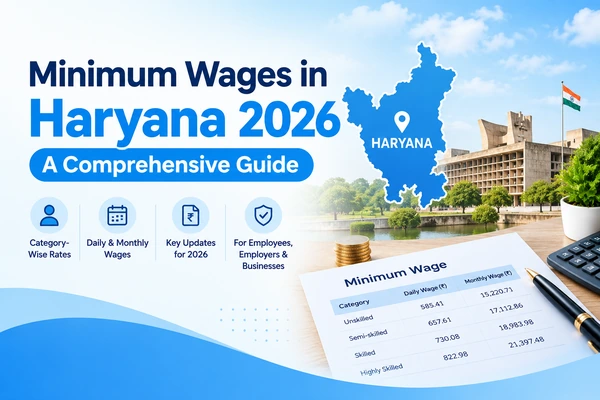
The Minimum Wage in Haryana 2026 was changed to ₹15,220.71 per month for unskilled workers on April 1, 2026. Therefore, if you are an employer, pay employees, or want to verify if your current level of pay is compliant with the law, you will have to consider these rates.

This guide will give you information regarding the new wages, their structure, and who qualifies for these particular wages, as well as the proper way of showing these numbers in your pay slip. You can also make use of a salary slip maker to create a pay slip that shows the updated wages as well.

What Are the Current Minimum Wages in Haryana?

On 9 April 2026, the Haryana Labour Department released a notification regarding the latest minimum wages in Haryana. The new wage rates come into effect from 1 April 2026, and the notification has been issued in accordance with the Code on Wages, 2019. 

Interestingly, Haryana pays employees the same rate no matter which part of the state they work in.

Haryana Minimum Wages April 2026: Category-Wise Rates
Minimum Wages in Haryana April 2026


Skill Category Per Day (₹) Per Month (₹)
Unskilled 585.41 15,220.71
Semi-skilled 645.41 16,780.74
Skilled 711.56 18,500.81
Highly skilled 747.14 19,425.85


These are the current minimum wages Haryana. 

Note: Certain news websites round the figure for unskilled services to ₹15,220.00. However, the correct figure is ₹15,220.71, which should be used for payroll purposes.

What Changed in the Haryana Minimum Wages 2026 Revision?

  • An increase of approximately 35 percent. The State Government accepted the recommendations of Labour Minister Anil Vij regarding increases that were effective as of April 1, 2026. All categories experienced an increase that was relatively consistent.
  • Four levels of skill. The previous schedules mentioned various sub-groups like semi-skilled and skilled types, whereas the new notice has only four types: unskilled, semi-skilled, skilled, and highly skilled.
  • No allowance divisions. The new figures represent minimum wage and businesses can’t claim any part of it as HRA, transport, or any other allowance.
  • A transition of the wage system rather than a typical CPI adjustment. Previous revisions always took effect on the price index, but this is a completely new wage agreement under the Code on wages.

Who Is Covered?

The minimum wages Haryana 2026 rates are applicable to establishments, factories, employees, workers, and contract labour governed under the Code on Wages, 2019. 

The following are the three important points:

  • Contract workers: The main employer shall have to ensure that the contractors pass on the minimum wage to the contract labourers.
  • Equal wages: The male staff as well as the female staff shall be entitled to receive equal wages for the same work.
  • Trainees: The trainees must receive at least 75% of the wages prescribed for the category, which, in no case, shall be less than the wages of an unskilled labourer, subject to the training being completed within one year.


How to Calculate Daily and Monthly Wages

According to the notification, there are two separate formulas to be used in the calculations.

  • Daily wage = monthly wage ÷ 26 days, and 
  • Deductions for absence = 30-day basis

In the case of an unskilled worker, ₹15,220.71 ÷ 26 gives a daily wage of ₹585.41. 

If the worker is absent for two days, then deductions for absence are worked out based on 30 days. Hence, the deduction will be ₹15,220.71 ÷ 30 × 2 = ₹1,014.71.

It is important to use the correct divisor in each case; otherwise, the payslip will not match the notification.

How Should Haryana Minimum Wages Appear on a Payslip?

A payslip issued to a minimum wage worker in Haryana should include the following:

  • The entire said amount as wage; the basic wage should not be included as allowances
  • The category of skill in which the worker is classified
  • Any overtime worked, filed separately as per line
  • Statutory deductions, such as PF and ESI, computed accurately based on the basic wage

As wage cannot be broken into allowances, a payslip indicating a low basic and a high “special” allowance will confirm an instance of non-compliance.

Haryana Minimum Wages 2025 vs 2026


Skill Category 2025 (₹/month) 2026 (₹/month) Increase (₹) Hike
Unskilled 11,274.60 15,220.71 3,946.11 35%
Semi-skilled 12,430.18 16,780.74 4,350.56 35%
Skilled 13,704.31 18,500.81 4,796.50 35%
Highly skilled 14,389.52 19,425.85 5,036.33 35%


Haryana Minimum Wages 2026 PDF Download

The official source is Haryana Government’s Labour Department (hrylabour.gov.in), which has published the notification dated 9 April 2026. Sites that provide compliance guidance services like SGCMS have preserved an online version of the initial notification in the PDF. 

Download this original notification and keep it safe with your payroll documents, as it may help you serve as proof in relation to every rate of pay that was provided.

MPHW Salary in Haryana: Is It the Same as Minimum Wage?

No. MPHW is an acronym for Multi-Purpose Health Worker. It is a government designation filled through the Haryana Staff Selection Commission and comes under the government pay matrix and not at the minimum wage. 

Pay for this designation is fixed at pay level 6, and basic pay starts at ₹35,400 a month, with the pay scale going up to ₹1,12,400. Additional allowances such as  DA and HRA will be added to this salary, while take-home salary will depend on the posting. Different sources have published different estimates for in-hand salary, so it is advisable to keep a check on the HSSC advertisement for the latest and exact figure.

Penalties and Compliance Tips for Employers

  • Assign each worker to the appropriate skill category according to his or her actual duties.
  • Pay the full informed rate as basic pay.
  • Maintain payroll records, attendance records, overtime records, and payslips.
  • Verify the payroll of the contractors since you are liable as the principal employer.
  • Recheck the notices issued by the Labour Department when the next revision is declared.

Conclusion

Minimum wages in Haryana 2026 run between ₹15,220.71 and ₹19,425.85 for the highly skilled workforce, depending on a single rate applicable throughout the state without subdividing it into allowances. Therefore, it is necessary to determine the classification of every employee and to ensure payment in full at the basic rate. Creating a salary slip is a straightforward way to show compliance with the minimum wage legislation.

FAQs

What is the minimum wage in Haryana in 2026?

From April 1, 2026, the wages are ₹15,220.71 for unskilled workers, ₹16,780.74 for semi-skilled, ₹18,500.81 for skilled, and ₹19,425.85 for highly skilled labor.

What are the current minimum wages in Haryana for skilled workers?

The monthly salary for skilled workers is ₹18,500.81, which equals to ₹711.56 daily payment.

Is the minimum wage different in Gurugram or Faridabad?

No. The same wage rate is applicable throughout Haryana.

Can an employer split the minimum wage into allowances?

The wage has to be paid in full, without any deductions.

How is the daily wage calculated?

The monthly wage can be divided by 26 to find out the daily payment.

What is the trainee wage in Haryana?

The wage must be equal to 75% of the applicable category wage, but never below the unskilled one for a period of 1 year.

Does the Haryana minimum wage apply to contract labour?

Yes. It is the responsibility of the main employer to ensure that the contractors follow this rule.
How to Download e-Nidhi Bihar Salary Slip Online?

If you are a Bihar government employee whether working as a school teacher, police officer, or administrative staff, getting physical copies of your monthly payslip no longer requires manual paperwork or visiting the Treasury office. The Finance Department of Bihar provides a centralized portal called CFMS Bihar (e-Nidhi) to manage payroll, GPF, and salary disbursements online.


This guide breaks down how to log in, access the Payee Self-Service portal, and download your e-nidhi bihar salary slip in PDF format.


What is e-Nidhi CFMS Bihar?

The Comprehensive Financial Management System (CFMS), commonly known as e-Nidhi Bihar, is the official digital portal managed by the Finance Department, Government of Bihar.
It acts as a single-window portal for over 500,000 state government employees to track monthly earnings, tax deductions, and provident fund statements securely.


Key Details Listed on Your e-Nidhi Payslip


  • Employee Identification: Name, CFMS Employee ID, PRAN/GPF Number, Designation, and Department.
  • Earnings Breakdown: Basic Pay, Dearness Allowance (DA), House Rent Allowance (HRA), and Medical or Transport Allowances.
  • Deductions: National Pension System (NPS) contribution, General Provident Fund (GPF), Group Insurance Scheme (GIS), Professional Tax, and Income Tax (TDS).
  • Net Payable Salary: The final amount credited to your registered bank account.


Prerequisites Before Logging In

To successfully download your payslip from the e-Nidhi portal, make sure you have the following details ready:


  1. CFMS User ID & Password: Provided by your Drawing and Disbursing Officer (DDO) or regional head office.
  2. Registered Mobile Number: Required for OTP verification.
  3. PRAN, GPF, or Aadhaar Number: Useful for profile verification if prompted.


Step-by-Step Guide: How to Download e-Nidhi Bihar Salary Slip Online

Follow these steps to generate and download your monthly salary slip PDF:


Step 1: Visit the Official Portal

Open your browser and navigate to the official e-Nidhi CFMS portal.


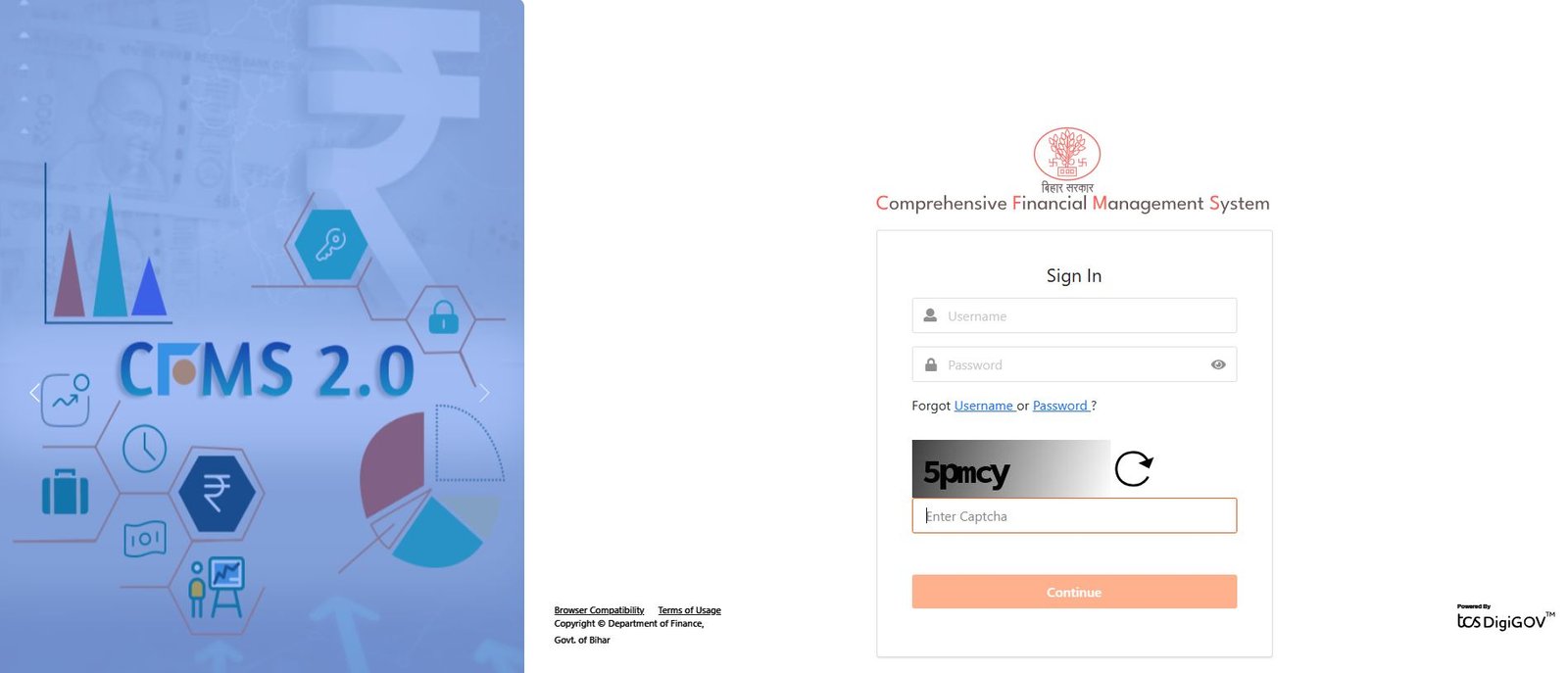
CFMS Employee Login Portal

Step 2: Access the Employee Login Module

On the homepage, select the Payee Self Service / e-GPF Self Service option. This redirects you to the secure employee login screen.


Step 3: Enter Your Login Credentials


  • Type in your User ID / Employee ID and Password.
  • Fill in the displayed Captcha Code accurately.
  • Click on Continue or Login.


Step 4: Complete OTP Verification

An OTP will be sent to your registered mobile number. Enter the verification code and click Get Me In or Submit to open your dashboard.


Step 5: Navigate to Employee Reports

Once inside your dashboard:


  1. Click on the Employee Self Services tab.
  2. Select Reports > Salary Statement / Monthly Payslip.
  3. Choose the Financial Year and the specific Month you need.


Step 6: Download the PDF

Click on the Generate or Download PDF button. Review the details on screen and save the document to your phone or computer for future reference.


Troubleshooting Common e-Nidhi Portal Issues


Issue Recommended Solution
Forgot Password Click on the “Forgot Password” link on the login page. Enter your Employee ID to receive a password reset link or OTP on your registered mobile number.
Mobile Number Not Updated Contact your departmental DDO/Admin to update your active mobile number in the CFMS database.
Portal Loading Error Clear your browser cache or switch to Microsoft Edge / Chrome in Desktop Mode.
If technical issues persist, reach out to the Finance Department Helpdesk at cfmshelpdesk@bihar.gov.in or call 0612-2211355.

What to Look For in a Formatted Pay Slip

Whether you work for the government or run a private business, an official pay stub should clearly separate gross earnings from statutory deductions.
If you want to examine standard layout structures—or check how allowances, deductions, and tax calculations should look on a finished document—you can inspect a realistic payslip template to see how proper salary slips are organized.


Need Custom Pay Slips for Your Own Business or Team?

While government portals like e-Nidhi handle public sector payroll, small business owners, contractors, and freelancers often need a fast way to issue official proof of income for their workers.
If you need to generate clean, accurate salary statements for your team, try our online payslip generator. It allows you to enter basic earnings, allowances, and custom deductions to create formatted PDF pay stubs in under two minutes—completely free, with no software installation required.


Frequently Asked Questions (FAQs)

1. How can I download my e-Nidhi Bihar salary slip without a password?

If you forget your password, you cannot directly download the slip. You must use the Forgot Password option on the login portal to generate an OTP on your registered mobile number and set a new password.


2. What is the CFMS Employee ID?

The CFMS ID is a unique numeric identifier assigned to every Bihar government employee by the Finance Department for payroll, GPF, and service record management.


3. Can I download e-Nidhi salary slips for previous years?

Yes. The portal allows you to select previous financial years under the Employee Reports section to download archived salary slips and annual income statements.


4. What should I do if my salary slip shows incorrect deduction details?

If you notice errors in your GPF, NPS, or Income Tax deductions, contact your department’s Drawing and Disbursing Officer (DDO) immediately to make corrections in the system.

Minimum Wages in West Bengal 2026: A Complete Guide

The minimum wages in West Bengal for 2026 (effective July 1, 2026, to December 31, 2026) range from ₹9,760 to ₹14,054.

The West Bengal minimum wages 2026 undergo revisions twice a year, but failure to revise even a little later can cost you trouble and leave you liable for arrears, penalties, and an uncomfortable talk with your labour inspector. This is important to know before you even make a payslip.


The Current Rates Of West Bengal Minimum Wages

The Labour Department of West Bengal notified new wage rates in the form of notifications on 22 June 2026, which came into effect from 1 July 2026 till 31 December 2026. 

In the usual way, the wages of West Bengal have been divided on the basis of two criteria: skills (four bands) and zones (two bands, on the basis of the location of the workplace).

On one hand, the lowest wage rate for a month will be ₹9,760 for an unskilled labourer working in a rural area or Zone B. On the other hand, the highest monthly wage will be ₹14,054 for a highly skilled labourer in Zone A.


Skill Category Zone A (₹/month) Zone A (₹/day) Zone B (₹/month) Zone B (₹/day)
Unskilled 10,558 406 9,760 375
Semi-Skilled 11,615 447 10,733 413
Skilled 12,777 491 11,807 454
Highly Skilled 14,054 541 12,990 500


How the Daily and Annual Rate Is Worked Out

West Bengal presents a single monthly statistic for each combination of skills and zones, and all other calculations are based on such figures. Thus, the monthly value, if divided by 26, will give the daily salary, whereas multiplying the monthly number by 12 will yield the yearly equivalent.

For instance, if we consider the case of an unskilled worker in Zone A,

  • Monthly: ₹10,558
  • Daily: 10,558 ÷ 26 ≈ ₹406
  • Annual: 10,558 × 12 = ₹1,26,696
  • Hourly (8-hour day): 406 ÷ 8 ≈ ₹50.75

The largest amount of time one can work in a day is eight hours within 48 hours of the week. All the work done in addition to this amount, as well as work done on rest days, shall be paid at double the rate and not at 1.5 times.

Please remember that wage revisions are minimums. For example, if one of your employees earns a salary which is more than the minimum wage, then you may not lower it because it is in compliance with the minimum wage act. Even if the wage amount is correct, you still violate the law by doing this.


Which Employees Fall Into Which Skill Category?

This is an area where a lot of employers can get misled, particularly in the case of office personnel. One must understand that these categories are quite significant in determining the pay structure.

  • Unskilled – Such job profiles include jobs of office workers, cleaners, janitors, security personnel, and messengers. All jobs require no training or decision-making by the worker.
  • Semi-skilled – Workers such as clerks and assistants in accountancy. The nature of work entails performing certain tasks, but the decision is taken by someone else.
  • Skilled – Jobs such as office staff, data entrants, maintenance personnel, and accountants. This means normal office work is mostly included in this category of jobs.
  • Highly skilled – Superior assistants, accountants, and data operators, etc.


Zone A vs Zone B: Where Does Your Workplace Fall?

The concept of zone is not affected by the district, nor does it depend on the registration of the business, but it is defined by the local authority responsible for the region.

  • If we talk about Zone A, it includes municipal corporations, municipalities, notified areas, and development authorities; and also, which is usually forgotten, townships linked with thermal power plants, even if the latter belong to rural areas (like in the case of industrial establishments located in Bardhaman, Bankura, and Purulia).
  • Zone B embraces everything that is not included in A, that is all the state’s gram panchayats.

Therefore, the cities of Kolkata, Howrah, Asansol, Durgapur, Siliguri, and Bidhannagar fall under Zone A, which means the high rates will be applied to each of the cities equally, and there are no special notifications for Kolkata and Howrah. 

Thus, even if the company is registered in Kolkata and also has a warehouse in an area classified as a rural region, both zones will operate under the same pay cycle.


Revision History Of West Bengal Minimum Wages

The revision of the West Bengal Minimum Wages takes place at the beginning of the year and in the middle of the year.


Period Notified Unskilled, Zone A (Monthly) Unskilled, Zone A (Daily)
1 Jul 2026 – 31 Dec 2026 22 Jun 2026 ₹10,558 ₹406
1 Jan 2026 – 30 Jun 2026 9 Jan 2026 ₹10,386 ₹399


How West Bengal Compares to Other States

The minimum wage in West Bengal is indeed lower compared to the rest of the country. Another factor that makes West Bengal different from other states is that while it declares a single minimum wage for the entire month, other states declare separate minimum wage rates for the basic wage and dearness allowance.


State Unskilled, Zone A/I (Daily) Structure
West Bengal ₹406 Flat consolidated rate, revised Jan & Jul
Gujarat ₹512.50 Basic + Variable Dearness Allowance
Goa ₹561 Basic + VDA, revised Apr & Oct


Final Thought

Ensuring that the minimum wage is followed in West Bengal is more than just a one-time feat. You should make an effort to make sure that the location and skill level of a worker are correct at the point of hiring in order to avoid having to make subsequent adjustments with regard to the wage. If you are changing your payroll procedure in connection with the change of minimum wage, consider making some changes to the payslip template as well, since the new payslip must provide the correct information regarding the skill level, zone, and wage.


FAQ

1) What’s the current minimum wage in Kolkata? 

Same as the rest of Zone A: ₹10,558 per month (₹406 per day) for unskilled, rising up to ₹14,054 per month for highly skilled. No separate notification for Kolkata.

2) How often does West Bengal revise minimum wages? 

Twice a year, on 1st January and 1st July.

3) Does this apply to contract or outsourced staff? 

Yes. The primary employer is responsible irrespective of whether the payment is being done through a contractor.

4) Can I lower someone’s pay to match a new minimum wage notification? 

No. An existing higher salary is protected under law, irrespective of what the minimum wage floor may be.

5) When’s the next revision due? 

On 1st January 2027, based on a half-yearly cycle.

Minimum Wages in Delhi 2026: A Complete Guide

It’s likely that you have looked up “minimum wages in Delhi 2026” on Google a few times if you are in charge of paying even a small number of employees in Delhi. There are several skill-level-based salary categories, and the ambiguity surrounding whether the prior wage or the revised wage should be taken into account makes it simple to become confused about what to pay employees.

This article explains several aspects of minimum wages of Delhi, including the various categories, the reasons for their periodic changes, and what can be anticipated going forward. Knowing everything regarding employee wages and all helps you to create an accurate payslip with a payslip generator.

What Are Delhi Minimum Wages 2026?

The pay notification from April 1, 2025, which covers the following information for commercial and retail establishments, which account for the majority of Delhi’s private sector workforce, is still in effect as of August 2026.

Category Basic (per month) VDA (per month) Total per month Approx. per day
Unskilled ₹18,066 ₹390 ₹18,456 ₹710
Semi-skilled ₹19,929 ₹442 ₹20,371 ₹784
Skilled ₹21,917 ₹494 ₹22,411 ₹862
Clerical/Supervisory (Non-Matric) ₹19,929 ₹442 ₹20,371 ₹784
Clerical/Supervisory (Matric, not Graduate) ₹21,917 ₹494 ₹22,411 ₹862
Clerical/Supervisory (Graduate & above) ₹23,836 ₹520 ₹24,356 ₹937


  • One is to remember a few things: Delhi does not divide the city into zones, in contrast to states like Maharashtra and Uttar Pradesh. Therefore, whether an enterprise is in Dwarka or Karol Bagh, it pays the same wage everywhere in the city. 
  • Second, the Variable Dearness Allowance (VDA) is added to the Basic wage to calculate the computed wage; we observe that the VDA is updated more frequently since it reacts to changes in inflation.
  • Thirdly, the slab for clerical positions is not determined by the job title listed in the documents. Regardless of what is specified in the recruitment letter, a “clerk” who has failed the matriculation exam is paid at the semi-skilled level rather than the clerical level.


Also Read: Minimum Wages in Kerala 2026


Minimum Wages in Delhi 2025 vs 2026

This is where a lot of employers get into problems. In theory, Delhi’s minimum wage rate is supposed to be updated every two years on April 1 and October 1. The VDA component of the minimum pay is calculated using the industrial worker wage index (CPI-IW). Theoretically, this means that the notification for April 2026 must be on its way, and the notification for October 2025 should have already been sent out.

There haven’t been any official communications about either of these changes as of this writing. The so-called “2025” and “2026” figures that many people refer to online are currently the same, since the figures for the rates that have been in effect since April 1, 2025, are still applicable. Additionally, the labour department in Delhi is not unfamiliar with this circumstance; notifications are typically delayed, sometimes by many months.

When late notifications eventually come in, they are typically dated back to the previous effective date instead of taking effect from the time at which the information about them comes to light. Several states have shown such practice recently, including Maharashtra, where the latest notification was dated August 2026 yet was effective from July 1, 2026. The same could happen in Delhi, resulting in an obligation for employers to pay volumes overdue by that point in time. Hence, the best thing to do is to have a safety net for wage arrears.

Delhi Minimum Wage for Unskilled Labour

The unskilled labour classification is the one most sought after, since it establishes the minimum salary limit. No employee may receive a paycheck less than this base level; therefore, the minimum wage for unskilled workers amounts to ₹18,456 per month (or ₹710 per day), calculated based on basic wages of ₹18,066 and ₹390 VDA.

It is important to note that unskilled labour is in no way unimportant. Rather, “unskilled” indicates that this is the minimum of the four skill sets specified in the Minimum Wages Act. The most typical examples of unskilled labour include housekeepers, helpers, loaders, and general labourers, unless the particular kind of work is separately registered with the authorities. 

Does Delhi Charge Professional Tax?

No;  this is where a lot of people from states like Maharashtra/ Karnataka get it wrong. They need to realize that Delhi does not charge Professional Tax on employees, so they cannot plan for Professional Tax deduction while preparing the Delhi basic salary slip with minimum wage in this city. What is charged in Delhi Labour Welfare Fund (LWF), which requires a small deduction to be paid as a contribution along with PF and ESI. 

So, a regular pay structure for Delhi minimum wage salary would thus be:

  • Basic pay + VDA (should be equal to or higher than the applicable minimum wage)
  • Employee and employer PF contribution
  • ESI
  • Labour Welfare Fund contribution
  • No Professional Tax deduction

Who Sets and Governs Minimum Wages in Delhi?

Through the NCT of Delhi’s Labour Department, the Delhi government has issued notifications regarding the minimum wage. Before the Code on Wages 2019 took effect on November 21, 2025, these were primarily governed by the Minimum Wages Act of 1948. Due to transitional provisions, earlier state notifications, including those from Delhi for April 2025, remain valid even though the adoption of the Code on Wages indicates a change in the frame of reference.

The Delhi Labour Department is the source of minimum wage notifications, and only those documents are legally binding. If someone wants to find the original information on minimum wage notifications instead of depending on outside sources, they should go there. 


Also Read: Is There an SSN Number in India?


A Quick Word on Staying Compliant

The truth is that minimum wage figures are updated much more frequently than most small business owners will be able to keep up with, and neglecting to do so can have upsetting repercussions like being called in to repay wages, paying fines, or receiving an upsetting notice from the labour department. 

In the event that certain employees have recently been paid minimum wage Delhi 2026, it would be prudent to verify your salary calculations in line with the updated pay structure before moving forward with the payroll, whether you are doing it manually or using a spreadsheet.

An online payslip maker will relieve you of this particular duty because it has built-in compliance checks that eliminate the need for you to recall (or even utilize an old bookmark) each rate change.

Frequently Asked Questions

1) What is the minimum wage in Delhi in 2026?

According to the notification that is effective from 1 April 2025, which is still in effect, for unskilled work, ₹18,456 is the salary per month; for semi-skilled, ₹ 20,371; and for skilled, ₹ 22,411. 

2) Is there a separate minimum wage in Delhi for 2025-26? 

There is no separate rate for the period “2025-26”; for example, the notification from 1 April 2025 will remain in effect until the October 2025 and April 2026 amendments are released.

3) What is the minimum salary in Delhi for unskilled workers? 

₹18,456 per month, or ₹710 daily, is the rate for unskilled work in shops and establishments as well.

4) Does Delhi have different minimum wages for different areas of the city? 

No. Unlike states with zone-based systems, Delhi has only one regular uniform rate for the whole territory.

5) Where can I download the official Delhi minimum wage notification PDF? 

The most reliable information source is the official website of the Delhi Labour Department (labour.delhi.gov.in), which publishes the wage notifications directly. Although third-party HR and payroll websites can also have copies of the wage amendments published on the Delhi Labour Department’s website, it is always better to double-check the references in such cases.

6) How often does the Delhi government revise minimum wages? 

Normally, the aforementioned wage amendments are made two times a year on 1 April and 1 October; however, in reality, they appear to be delayed a lot in Delhi.


Also Read:

Minimum Wages in Gujarat 2026

How to Download Sevaarth Salary Slip Online?

What is TDS in Salary? – 2026 Guide

If you are a salaried employee in India, you have probably noticed a deduction called TDS in your salary slip. Many employees wonder: what is TDS in salary, why is it deducted every month, and how does it affect take-home salary?

In simple words, TDS helps the government collect income tax directly from your salary before the money reaches your bank account. Employers deduct a certain amount based on your estimated annual income and deposit it with the Income Tax Department.

Understanding TDS details in your salary slip is important for managing taxes, checking deductions, and maintaining accurate payroll records with a salary slip generator.

What is TDS?

TDS is a tax collection mechanism that was introduced by the Income Tax Department to make sure regular and timely tax collection. Instead of waiting for taxpayers to pay tax at the end of the year, the government collects tax throughout the year.

TDS applies to various types of payments, which include:

  • Salary
  • Interest income
  • Professional fees
  • Rent
  • Commission
  • Contract payments
  • Dividend income

In salary income, employers estimate your annual taxable income and deduct tax every month accordingly.

How TDS on salary work?

Below is the complete process working of salary TDS:

1- Employer estimates annual salary

  • Basic pay
  • Allowances
  • Incentives
  • Bonuses
  • Perquisites

2- Deductions

Eligible deductions are adjusted as:

  • Standard deduction
  • Section 80C investments
  • NPS contributions
  • Health insurance
  • Home loan interest

3- Taxable income is calculated

Taxable income = Gross salary – deductions

4- Income tax applied 

The applicable tax slab under the old regime is applied.

5- Monthly TDS Deducted

The estimated annual tax liability is divided across months.

What is TDS due date?

TDS value for tax deducted between April and February is normally payable through the seventh of the next month, while the March deduction is payable by April 30. Quarterly TDS returns have to be filed using the end of the month after each filing.

What is TDS return due date?

TDS returns are normally due on the 31st of the month after the zone break, except for the March zone, which is due on May 31.

What is TDS in salary?

TDS in salary is the monthly deduction of income tax by the employer based on the employee’s taxable income and applicable tax slab. Employers calculate TDS after considering:

  • Basic salary
  • HRA
  • Bonus
  • Special allowances
  • Perquisites
  • Standard deduction
  • Investments under Section 80C
  • Home loan benefits
  • Other deductions 

Need Accurate & Professional Pay Stubs Without the Hassle?

Create your pay stubs online in minutes with easy-to-use templates and instant download options.

Generate Your Salary Slip   

TDS Forms

The following are the TDS Forms:

    • Form 16: The entire paid income and deducted for the duration of the monetary year was issued to the employees exhibiting TDS by the employers.
    • Form 16A: Issued for TDS for deductions beyond earnings, which includes banking hobbies, fees, or specialist payments.
    • Form 24Q: Quarterly TDS return filed by employers reporting tax deducted from employee salaries.
    • Form 26Q: The quarterly TDS return is used to document tax deductions on bills made to residents in addition to earnings.
    • Form 27Q: Quarterly TDS returns for reporting tax after deducting bills made to non-resident individuals or foreign entities.
    • Form 26QB: Invoice cum statement used to deposit TDS deduction while shopping for real estate.
    • Form 26QC: Challan-cum-declaration used for the deposit of TDS on the payment of rent made by individuals or HUFs under Section 194IB.
    • Form 15G / 15H: Self-declaration forms submitted to banks or financial institutions to avoid TDS when income is below the taxable limit.
    • Form 13: Application submitted to the Income Tax Department to request a deduction of TDS at a lower rate or nil rate.

How to file TDS return online?

Filing TDS returns online is essential for employers and agencies that deduct tax at the time of supply from workers’ wages, contractor bills, leases, or other taxable payments. The Income Tax Department calls on deductors to post TDS returns on a quarterly basis to document tax deductions and deposits. Below are simple steps:

1- Collect Required Documents

  • TAN
  • PAN details of employees or deductees
  • Salary and deduction details
  • Challan information for deposited TDS
  • Form 24Q, 26Q, 27Q, or 27EQ depending on the type of deduction

2- Prepare the TDS Return

Use a free payslip generator to prepare the TDS return file. Make sure all salary details, deductions, and PAN information are accurate to avoid rejection.

3- Validate the File

After preparing the return, validate the document using the File Validation Utility (FVU). The verification method checks for errors in PAN, drive details, and deduction amount.

4- Upload the TDS Return

Visit the official Income Tax e-Filing Portal and log in using your TAN credentials.

Then:

  1. Go to TDS > Upload TDS
  2. Select the correct form type
  3. Choose the financial year and quarter
  4. Upload the validated .fvu file
  5. Submit the return using DSC or EVC verification

5- Check Filing Status

Once submitted, you can monitor the reputation of your TDS return from the dashboard. If custom, the status will show Processed.

TDS Deduction Rules

Understanding the TDS deduction rules is crucial for employees and employers due to:

  • TAN Requirement: Employers should have a TAN.
  • PAN Submission: Employees should provide PAN to avoid higher TDS deduction.
  • Tax Slab-Based Deduction: Salary TDS depends on the applicable tax slab.
  • Declaration of Investments: Investment proofs, rent receipts, insurance premiums receipts, and home loan statements.
  • Employer must deposit TDS: The deducted amount should be deposited within the prescribed period.
  • Quarterly TDS return filing: Employers must file quarterly TDS returns.

Latest TDS rules in 2026

Recent compliance trends include:

  • Increased automation
  • AI-based tax mismatch detection
  • Faster notice generation
  • Digital correction statements
  • Real-time PAN verification
  • Enhanced AIS integration

Key Takeaways

TDS plays an important role in our tax planning. Throughout a financial year, we interact in several transactions in which TDS deduction is mandatory. It is important to be aware of the TDS costs relevant to each transaction and to ensure timely compliance with tax and legal guidelines to avoid penalties. Moreover, with a clean understanding of our TDS liability, we can effectively plan for deductions and exemptions. This foresight reduces our TDS deduction rather than optimizing our general tax and financial savings.

FAQs

1- Is TDS refundable on salary?

Yes, tax deducted at source (TDS) on salary is refundable if the total tax deducted by your corporation exceeds your actual tax liability for the financial year. You can claim this excess amount as a refund by submitting your Income Tax Return (ITR) and providing the correct funding information.

2- What is the TDS for 50,000 salary?

For a month-to-month profit of ₹50,000 (₹6,00,000 annually), TDS is generally zero under the new tax regime due to the exemption (earnings). ₹7 lakh). Under the old tax system, if no investment is made, taxes of ₹6 lakh are rounded up to ₹32,500–₹33,800 annually, which translates to more or less ₹2, seven hundred–₹2,800 monthly, depending on exemptions.

3- Who should pay TDS on salary?

Under Section 192 of the Enterprise (Payment) Income Tax Act, it is liable to deduct tax withheld (TDS) at source on salaries when making payments to employees, provided that the earnings exceed the exemption restriction. The corporation is responsible for calculating, deducting, and depositing this tax with the authorities every month.

4- Is TDS 100% refundable?

TDS refund is applicable when the tax deducted at source (TDS) by your employer exceeds your actual tax liability for the financial year.

5- Why is TDS deducted from salary every month?

TDS (Tax Deducted at Source) is deducted from salary every month under Section 192 of the Income Tax Act to ensure a steady flow of tax revenue for the government and to prevent the burden of a large lump-sum tax payment at the end of the year.

6- Can I claim TDS after 1 year?

Yes, you can declare TDS (Tax Deducted at Source) after 1 12 months, normally up to four years, with the help of an updated Income Tax Return (ITR-U) or a revised return, provided that the corresponding benefit is suggested in that year.

7- Is TDS 2% or 5%?

Section 194IB: This section applies to persons or HUFs who are not now subject to tax audit. TDS is deducted at the rate of 2% on rent paid for land, building, or both, when the monthly rent exceeds ₹50,000.

8- What is TDS in Income Tax?

TDS is a device where the payer deducts a percentage of tax before creating bills like salary, lease, or interest, and deposits it all at once with the government on behalf of the recipient.


Also Check:

NCP Days in PF: Complete Guide with Examples & Calculation

Paid Time Off (PTO): Meaning, Benefits & How It Works

What is the Gratuity Form: Everything You Need to Know (2026 Guide)

Is There an SSN Number in India? Everything You Need to Know

NCP Days in PF: Complete Guide with Examples & Calculation

If you’ve ever checked your payslip or EPF statement, you may have noticed a term called NCP Days. It might seem technical, but it plays a major role in your salary, PF contribution, and pension benefits.

In this guide by Payslip Maker Free, we’ll explain everything about NCP Days in PF in a simple and practical way.

What Are NCP Days in PF?

NCP stands for Non-Contributory Period.

NCP Days refer to the number of days in a month when an employee does not earn wages, and therefore no Provident Fund (PF) contribution is made for those days.

👉 In simple words:
No salary = No PF contribution = NCP Days

Why NCP Days Are Important

NCP days directly affect multiple aspects of your payroll:

1. PF Contribution Gets Reduced

PF is calculated based on your salary. If your salary is reduced due to unpaid days, your PF contribution also decreases.

2. Salary Reduction

More NCP days mean fewer paid days → lower take-home salary.

3. Pension Impact

EPF pension benefits depend on contribution history. Higher NCP days can reduce your total pensionable service.

Common Reasons for NCP Days

NCP days usually occur in the following situations:

  • Leave Without Pay (LWP)
  • Unpaid absences
  • Long leave or sabbatical
  • Suspension without pay
  • Joining mid-month
  • Leaving mid-month
  • Zero salary in a month

👉 Any situation where salary is not paid leads to NCP days.

Difference Between NCP Days, LOP & Absent Days

Many people confuse these terms. Here’s a simple breakdown:

Term Meaning PF Impact
NCP Days Days with no PF contribution Direct impact
LOP (Loss of Pay) Salary deduction due to unpaid leave Leads to NCP
Absent Days Attendance record (paid/unpaid) Only unpaid days count

👉 Important:
All LOP days usually become NCP days, but not all NCP days come from LOP.

How to Calculate NCP Days in PF

The calculation is straightforward:

👉 NCP Days = Total number of unpaid days in a month

Example:

  • Total days in month = 30
  • Unpaid leave = 4 days

👉 NCP Days = 4

Confused about how NCP Days affect your PF and salary?

Calculate accurate deductions and understand every detail in seconds.

Generate Your Salary Slip  

PF Calculation with NCP Days (Example)

Let’s understand how NCP days affect PF:

Scenario:

  • Monthly PF salary = ₹15,000
  • Total days = 30
  • Unpaid days (NCP) = 5

Step 1: Calculate Paid Salary

₹15,000 ÷ 30 × 25 = ₹12,500

Step 2: Calculate PF Contribution

12% of ₹12,500 = ₹1,500

👉 Without NCP days, PF would be ₹1,800
👉 Due to NCP days, PF is reduced to ₹1,500

Real-Life Examples of NCP Days

Example 1: No Leave

  • Total days: 30
  • Unpaid days: 0
    👉 NCP Days = 0

Example 2: Leave Without Pay

  • Total days: 31
  • LWP: 3 days
    👉 NCP Days = 3

Example 3: Zero Salary Month

  • Total days: 30
  • Salary: ₹0
    👉 NCP Days = 30

This is known as a zero-wage month, where no PF contribution is made.

Rules for Reporting NCP Days

Employers must follow these rules while filing PF returns:

  • NCP days must be reported in monthly PF filing (ECR)
  • Only whole numbers are allowed (no decimals)
  • Cannot be left blank
  • If salary is zero → NCP = total days in the month

Incorrect reporting can lead to compliance issues.

Where Can You Check NCP Days?

You can find NCP days in:

  • Your monthly payslip
  • Payroll software or HR portal
  • EPF passbook (via UAN portal)
  • Annual PF statement

Common Mistakes to Avoid

  • Counting paid leave as NCP days
  • Entering fractional values (like 2.5 days)
  • Ignoring zero-salary months
  • Mismatch between payroll and PF filing

These errors can lead to PF calculation issues or rejection.

How to Reduce NCP Days

While some situations are unavoidable, you can reduce NCP impact by:

  • Planning leaves in advance
  • Using paid leave effectively
  • Avoiding unnecessary unpaid absences

Final Thoughts

NCP Days in PF may seem like a small detail, but they have a big impact on your salary, PF savings, and future pension.

Understanding NCP days helps:

  • Employees track their earnings better
  • Employers maintain accurate payroll compliance

FAQs

What is the full form of NCP in PF?

NCP stands for Non-Contributory Period.

Do NCP days reduce PF contribution?

Yes, PF is calculated only on paid days, so NCP days reduce PF.

Are NCP days the same as LOP?

Not exactly. LOP often leads to NCP days, but they are not identical.

Do NCP days affect pension?

Yes, fewer contributions may reduce your pensionable service.

Also Check:

Minimum Wages in Gujarat 2026: Latest Rates & Per Day Salary Guide

Form 24Q (Quarterly TDS Return): Meaning & Deadlines 2026

Is There an SSN Number in India? Everything You Need to Know

Paid Time Off (PTO): Meaning, Benefits & How It Works

What is Form 16?- A Complete Guide

Salary Increment Request Letter:Comprehensive Guide

Asking for a salary increase can feel uncomfortable—but when done correctly, it’s a professional step toward career growth. A well-written salary increment request letter helps you clearly communicate your value, achievements, and expectations.

Using a free payslip generator, you can quickly create accurate salary slips after your increment is approved. It helps maintain clear records for both employees and employers.

In this guide, you’ll learn how to write an effective salary increment request letter, along with ready-to-use templates and expert tips.

What is a Salary Increment Request Letter?

A salary increment request letter is a formal document written by an employee to request a salary increase based on performance, added responsibilities, or market standards.

It acts as a professional way to:

  • Highlight your achievements
  • Justify your request
  • Start a salary discussion with your manager

When Should You Ask for a Salary Increment?

Timing matters a lot. The best moments include:

  • During annual performance reviews
  • After completing a major project
  • When you take on additional responsibilities
  • After a promotion or role change
  • When your salary is below market standards

A strong request works best when it’s backed by measurable results and business impact.

Key Elements of a Salary Increment Letter

To make your request effective, include the following:

  1. Professional greeting
  2. Clear request for salary review
  3. Your achievements and contributions
  4. Reason for the increment (performance, promotion, etc.)
  5. Polite closing and willingness to discuss

A concise and professional tone significantly increases your chances of success.

Simple Salary Increment Request Letter Format

Here’s a clean format you can follow:

Subject: Request for Salary Increment

Dear [Manager’s Name],

I hope you are doing well.

I would like to request a review of my current salary based on my contributions to the team. Over the past [time period], I have [mention key achievements or responsibilities]. Considering my performance and increased responsibilities, I would appreciate the opportunity to discuss a possible salary adjustment.

Thank you for your time and consideration.

Sincerely,
[Your Name]

Best Salary Increment Request Letter Examples

1. Request Based on Performance

Subject: Salary Revision Request

Dear [Manager’s Name],

Over the past year, I have consistently exceeded my targets and contributed to improving team productivity. Based on these achievements, I would like to request a review of my salary. I would appreciate the opportunity to discuss this further.

Thank you for your support.

Sincerely,
[Your Name]

2. Request After Promotion

Subject: Salary Review Following Promotion

Dear [Manager’s Name],

Thank you for the opportunity to take on my new role. With the increased responsibilities, I would like to request a revision of my salary.

I look forward to discussing this further.

Best regards,
[Your Name]

Ready to document your new salary after a successful raise?

Use our free payslip generator to create accurate, professional salary slips in minutes.

Generate Your Salary Slip  

3. Request Based on Market Standards

Subject: Request for Salary Adjustment

Dear [Manager’s Name],

I would like to request a review of my salary based on current industry standards and my contributions to the organization.

I value my role here and look forward to discussing this further.

Thank you for your consideration.

Sincerely,
[Your Name]

Common Mistakes to Avoid

Many salary requests fail due to poor communication. Avoid these mistakes:

  • ❌ Asking without proof of achievements
  • ❌ Using emotional arguments
  • ❌ Comparing yourself with coworkers
  • ❌ Requesting unrealistic hikes
  • ❌ Writing long, unclear emails

A professional, fact-based approach always works better.

Pro Tips to Increase Approval Chances

  • ✔ Use data (KPIs, targets, results)
  • ✔ Keep your tone polite and confident
  • ✔ Be realistic with expectations
  • ✔ Practice your discussion beforehand
  • ✔ Follow up professionally

How Payslip Maker Can Help

Once your salary increment is approved, having accurate documentation is essential. With Payslip Maker Free you can:

  • Generate professional payslips instantly
  • Track salary changes and increments
  • Maintain clear salary records for future reference

This ensures transparency and helps during job switches, loans, or financial planning.

Final Thoughts

A salary increment request letter is more than just a formality—it’s your opportunity to showcase your value. When written clearly and backed by results, it can open the door to better compensation and career growth.

Take the time to prepare, stay professional, and make your case confidently.

FAQs: Salary Increment Request Letter

1. What is a salary increment request letter?

A salary increment request letter is a formal document written by an employee to request a raise based on performance, responsibilities, or market standards.

2. When is the best time to ask for a salary increase?

The ideal time is during performance reviews, after completing major projects, or when you’ve taken on additional responsibilities.

3. How do I justify my salary increment request?

You should include measurable achievements such as:

  • Meeting or exceeding targets
  • Increased responsibilities
  • Contribution to company growth

4. What should I avoid in a salary increment letter?

Avoid:

  • Emotional language
  • Complaints about colleagues
  • Unrealistic salary expectations
  • Vague or unsupported claims

5. Can I ask for a salary increment via email?

Yes, email is a common and professional way to request a salary increase. Ensure your message is clear, concise, and formal.

6. How long should a salary increment letter be?

It should be short and precise—typically 150–250 words—focusing only on key achievements and your request.

7. What happens after my salary increment is approved?

Once approved, your employer updates your compensation structure. You can then generate updated salary records and payslips using tools like PayslipMakerFree.com.

8. How much salary increment should I ask for?

This depends on your performance, industry standards, and company policies. Typically, increments range from 5% to 20%.

Also Check:

Minimum Wages in Gujarat 2026: Latest Rates & Per Day Salary Guide

Form 24Q (Quarterly TDS Return): Meaning & Deadlines 2026

Is There an SSN Number in India? Everything You Need to Know

Paid Time Off (PTO): Meaning, Benefits & How It Works

What is Form 16?- A Complete Guide

Minimum Wages in Kerala 2026: Latest Rates & Compliance Guide

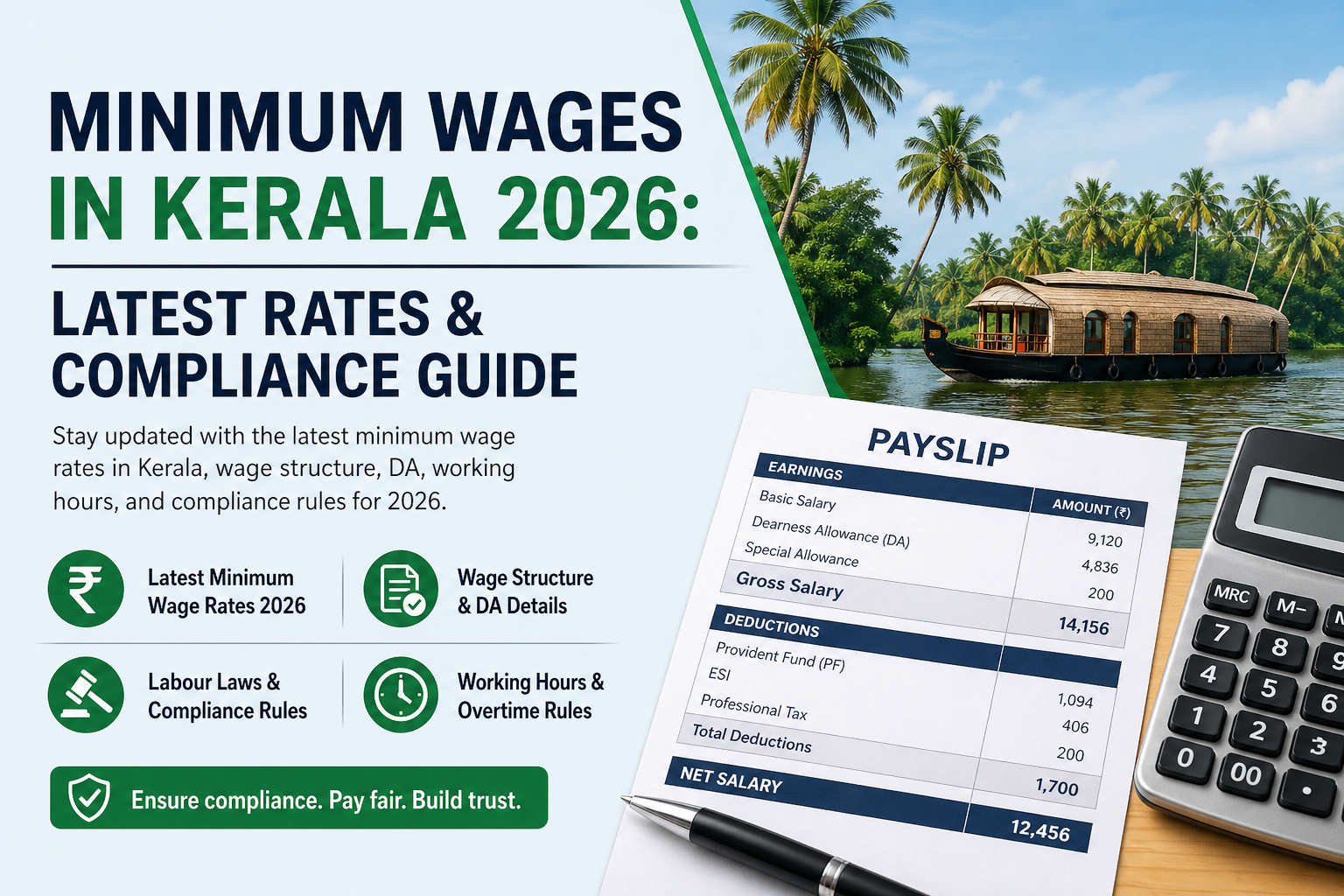
Minimum wages are one of the most important aspects of salary structure in India. If you are an employer, HR professional, or employee in Kerala, understanding the latest minimum wage rules is essential for compliance and fair compensation.

In 2026, the Kerala government has updated wage structures based on skill level, industry, and location. These changes directly impact how salaries are calculated—and how payslips should be generated.

In this blog, we’ll break down everything you need to know about Kerala minimum wages in 2026, along with how you can create accurate salary slips using a payslip maker free tool.

What Are Minimum Wages?

Minimum wages refer to the lowest amount an employer must legally pay employees for their work. These wages are set under the Minimum Wages Act, 1948, and revised periodically by state governments.

In Kerala, minimum wages depend on:

  • Skill level (unskilled, semi-skilled, skilled)
  • Industry (IT, plantation, retail, etc.)
  • Location (district-wise variations)
  • Cost of living (via DA – Dearness Allowance)

What is the Minimum Wage in Kerala in 2026?

The minimum wage in Kerala in 2026 ranges from ₹13,000 to ₹25,000 per month, depending on skill level, industry, and location. Daily wages range between ₹500 and ₹750.

Kerala Minimum Wages 2026 (Latest Update)

As per the latest 2026 updates, Kerala has revised wages for multiple sectors, especially shops & establishments and IT sector employees.

Category Skill Level Monthly Wage (₹) Daily Wage (₹) Notes
Shops & Establishments Unskilled 13,000 – 15,000 500 – 550 Entry-level roles
Shops & Establishments Semi-Skilled 14,000 – 18,000 550 – 650 Requires basic experience
Shops & Establishments Skilled 16,000 – 22,000 650 – 750 Technical or trained roles
IT Sector Entry-Level 15,000 – 18,000 — Junior employees
IT Sector Experienced 20,000+ — Skilled professionals
Plantation Workers Unskilled — 550 – 750 Includes estate benefits
Supervisory Roles Skilled/Highly Skilled 18,000 – 25,000+ — Managerial positions

Example: Monthly Minimum Wages (2026)

  • Grade A worker (Ernakulam/Kochi)
    • Basic: ₹9,120
    • DA: ₹4,836
    • Special Allowance: ₹200
    • Total: ₹14,156/month
  • IT Sector (Entry Level)
    • Approx: ₹15,000 – ₹18,000/month
  • Plantation Workers
    • ₹550 – ₹750 per day

These numbers show how wages vary depending on the job role and industry.

Confused about creating a correct payslip as per Kerala minimum wages?

Use our payslip maker free tool to create a salary pay slip online in seconds.

Generate Your Salary Slip  

District-Wise Wage Variation in Kerala

Unlike some states, Kerala follows a zone-based wage system, meaning salaries differ across districts.

For example:

  • Urban areas like Kochi (Ernakulam) offer higher wages
  • Rural areas may have slightly lower wage slabs
  • Special zones (like Munnar or Idukki) have unique rates

Monthly wages can range from:

  • ₹13,000 to ₹25,000+ depending on grade and sector

This variation ensures wages match the local cost of living.

Skill-Based Wage Categories

Kerala classifies workers into different grades:

1. Unskilled Workers

  • Basic manual work
  • Lowest wage category

2. Semi-Skilled Workers

  • Requires some training or experience

3. Skilled Workers

  • Technical expertise required
  • Higher pay scale

4. Highly Skilled Workers

  • Specialized roles (IT, engineering, etc.)
  • Highest wage category

In some industries, wages for skilled workers can reach:

  • ₹17,940 to ₹21,360 per month or more

Components of Minimum Wage Salary

A proper salary structure in Kerala includes:

1. Basic Pay

Fixed base salary set by the government

2. Dearness Allowance (DA)

  • Adjusted based on inflation (CPI index)
  • Revised periodically

3. Special Allowance

  • Additional fixed amount (varies by sector)

4. Total Gross Salary

Basic + DA + allowances

👉 This is exactly what should appear on a payslip.

Working Hours & Overtime Rules in Kerala

Minimum wage laws also define working conditions:

Rule Details
Daily Working Hours 8 hours
Weekly Limit 48 hours
Overtime Pay 2× regular wage
  • Standard working hours: 8 hours per day
  • Weekly limit: 48 hours
  • Overtime: Paid at double the normal wage

Employers must comply with these rules to avoid penalties.

Why Minimum Wages Matter for Payslips

If you are generating salary slips, minimum wages play a critical role.

For Employers:

  • Ensures legal compliance
  • Avoids penalties and labour disputes
  • Maintains transparency

For Employees:

  • Ensures fair pay
  • Helps in loans, tax filing, and documentation

How to Create a Payslip Based on Kerala Minimum Wages

Using a payslip maker free tool simplifies the process.

Step-by-Step:

  1. Enter employee details
  2. Add basic salary (as per Kerala wage rules)
  3. Include DA and allowances
  4. Add deductions (PF, ESI if applicable)
  5. Generate and download payslip

A good salary pay slip online tool ensures:

  • Accurate calculations
  • Professional format
  • Instant download

Compliance Tips for Businesses in Kerala

To stay compliant in 2026:

✔ Always follow latest wage notifications
✔ Update DA regularly based on CPI
✔ Maintain proper payroll records
✔ Issue monthly payslips to employees
✔ Avoid underpaying below minimum wage

Failure to comply can result in:

  • Legal penalties
  • Fines
  • Business reputation damage

Common Mistakes to Avoid

Many businesses still make errors like:

  • Paying below minimum wage
  • Ignoring DA updates
  • Not issuing payslips
  • Incorrect salary breakup

Using a reliable payslip maker free tool can help eliminate these mistakes.

Future Trends in Minimum Wages (India 2026)

With new labour codes being implemented across India:

  • Wage structures may become more standardized
  • Digital payroll systems will increase
  • Salary transparency will improve

Kerala is already ahead in structured wage systems, making compliance easier for businesses.

Final Thoughts

Kerala minimum wages 2026 are structured to ensure fair pay across industries based on skill level, location, and experience. Employers must follow these wage rules to stay compliant, while employees benefit from transparent salary structures.

Using a payslip maker free tool helps you generate a salary pay slip online that is accurate, professional, and legally compliant.

Frequently Asked Questions

What is the minimum salary in Kerala in 2026?

The minimum salary in Kerala ranges from ₹13,000 to ₹25,000 per month based on job role and skill level.

Is DA included in minimum wages?

Yes, Dearness Allowance (DA) is included and revised regularly based on inflation.

Can employers pay less than minimum wage?

No, paying below minimum wage is illegal and can lead to penalties.

Are minimum wages the same across Kerala?

No, wages vary by district, industry, and skill category.

Also Read:

How to Download Sevaarth Salary Slip Online?

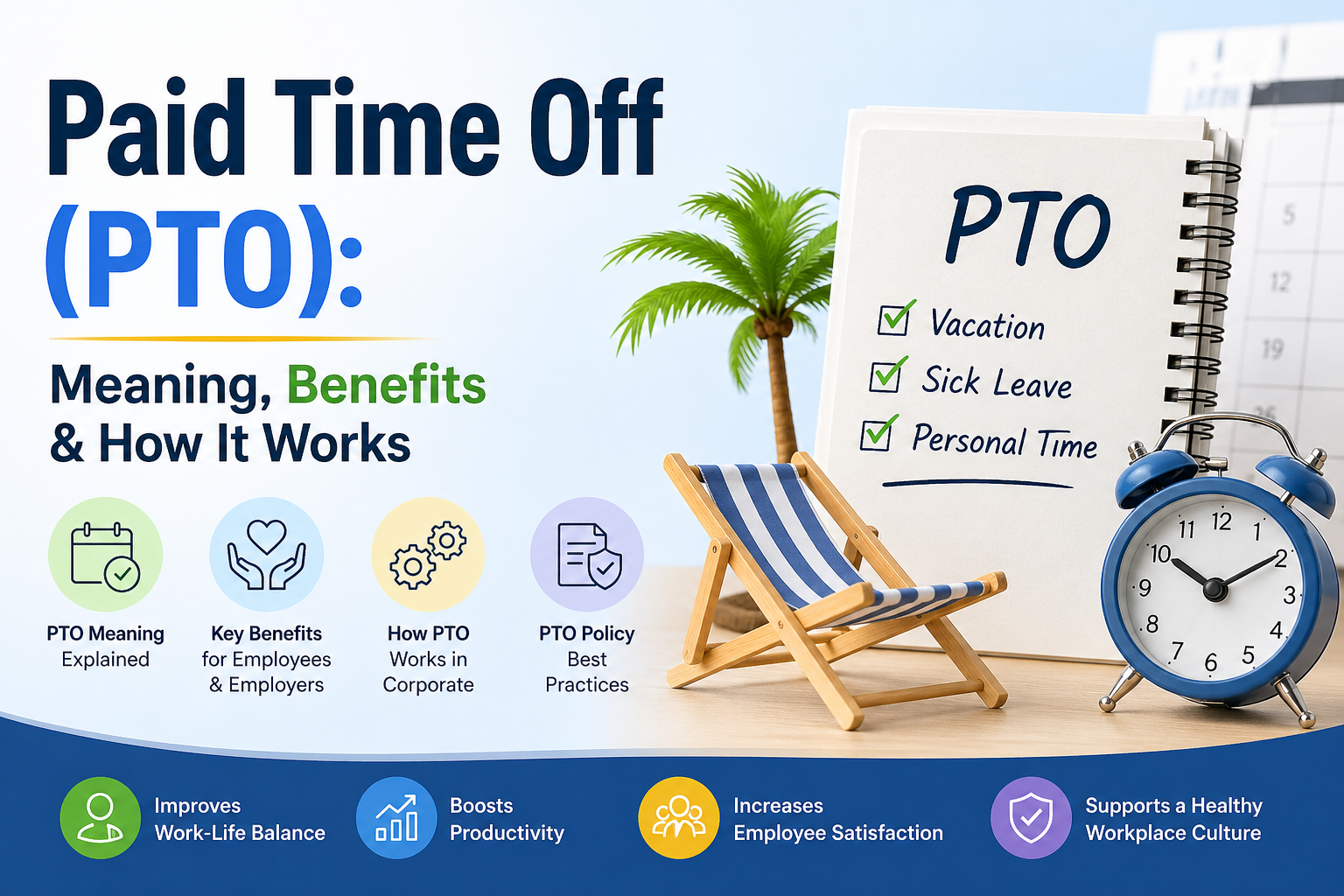
Paid Time Off (PTO): Meaning, Benefits & How It Works

In today’s fast-paced corporate environment, maintaining a healthy work-life balance is more important than ever. One of the most valuable benefits employees receive is Paid Time Off (PTO). But what exactly does PTO mean? How does it work in corporate settings? And why should both employers and employees understand it clearly?

In this detailed guide, we’ll break down everything you need to know about PTO—its full form, meaning, types, benefits, and how it reflects in payroll systems.

Generate your salary pay slip online to keep track of PTO balances and salary details in one place. Payslip Maker Free helps you manage leave records and create accurate payroll documents instantly.

What is PTO? (PTO Full Form & Meaning)

PTO full form stands for Paid Time Off.

PTO meaning:
Paid Time Off refers to the leave employees can take while still receiving their regular salary. Instead of categorizing leave into separate types (like sick leave or vacation), many companies combine them into a single PTO balance.

Simple Definition:

PTO is paid leave that employees can use for vacation, illness, personal time, or emergencies without losing income.

What is PTO Leave?

PTO leave is the actual time an employee takes off from work using their available PTO balance.

For example:

  • Taking a vacation → PTO leave
  • Staying home due to illness → PTO leave
  • Personal errands → PTO leave

In modern workplaces, PTO gives flexibility and reduces the need for explaining specific reasons.

PTO meaning in Corporate: How It Works

In corporate environments, PTO policies vary by company, but the general structure is similar.

1. Accrual System

Employees earn PTO over time. For example:

  • 1.5 days per month
  • 18 days per year

2. Lump Sum System

Employees receive all PTO days at the beginning of the year.

3. Carry Forward Policy

Some companies allow unused PTO to roll over to the next year, while others follow a “use it or lose it” rule.

4. Approval Process

Employees usually request PTO through HR systems, and managers approve based on workload and availability.

Want to better understand Paid Time Off and manage your payroll easily?

Create accurate salary slips and track PTO in seconds with Payslip Maker Free’s simple online tool.

Generate Your Salary Slip   

PTO Meaning in Office & Workplace Culture

In an office setting, PTO represents more than just leave—it reflects company culture.

A good PTO policy:

  • Encourages work-life balance
  • Reduces burnout
  • Improves employee satisfaction
  • Boosts productivity

Companies that promote PTO usage often see higher employee retention rates.

Types of PTO Leave

Even though PTO combines multiple leave types, it is commonly used for:

1. Vacation Leave

Time off for travel, relaxation, or personal enjoyment.

2. Sick Leave

Used when employees are unwell or need medical attention.

3. Personal Leave

For personal matters like family events, errands, or emergencies.

4. Mental Health Days

Increasingly common in modern workplaces.

Benefits of PTO for Employees

1. Financial Security

Employees continue receiving salary while on leave.

2. Flexibility

No need to justify the reason for leave in detail.

3. Better Work-Life Balance

Encourages rest and personal time.

4. Reduced Stress & Burnout

Regular breaks improve mental and physical health.

Benefits of PTO for Employers

1. Increased Productivity

Well-rested employees perform better.

2. Improved Retention

Competitive PTO policies attract and retain talent.

3. Simplified Leave Management

One leave category instead of multiple types.

4. Positive Workplace Culture

Builds trust and employee satisfaction.

PTO and Payroll: Why It Matters

PTO is directly linked to payroll calculations. When employees take PTO:

  • Their salary remains unchanged
  • PTO balances are reduced
  • Records must be updated accurately

This is where payroll tools become essential.

How PTO Appears on a Payslip

A payslip typically includes:

  • Total PTO balance
  • PTO used in the current period
  • Remaining PTO days

Accurate tracking ensures transparency between employer and employee.

PTO vs Traditional Leave Systems

Feature PTO System Traditional Leave
Flexibility High Low
Leave Types Combined Separate
Tracking Simple Complex
Employee Freedom More Limited

Common Questions About PTO

What is PTO leave in simple terms?

PTO leave is paid time off from work that employees can use for any personal reason.

What is PTO in corporate?

In corporate settings, PTO is a structured leave policy that combines vacation, sick leave, and personal time.

Is PTO paid?

Yes, employees receive their regular salary while on PTO.

Can PTO be cashed out?

In some companies, unused PTO can be converted into cash, depending on poli

Final Thoughts

Understanding PTO meaning, its structure, and its role in the workplace is essential for both employees and employers. It’s not just a benefit—it’s a crucial part of modern work culture that promotes productivity, well-being, and job satisfaction.

To manage PTO efficiently and ensure accurate payroll records, using a Free Payslip Generator tool is a smart move. It simplifies calculations, improves transparency, and helps businesses stay organized without extra costs.

Also check:

Is There an SSN Number in India? Everything You Need to Know

Form 24Q (Quarterly TDS Return): Meaning & Deadlines 2026

Minimum Wages in Gujarat 2026: Latest Rates & Per Day Salary Guide

What is the Gratuity Form: Everything You Need to Know (2026 Guide)

What is LWD in Job? Everything You Need to Know (2026)

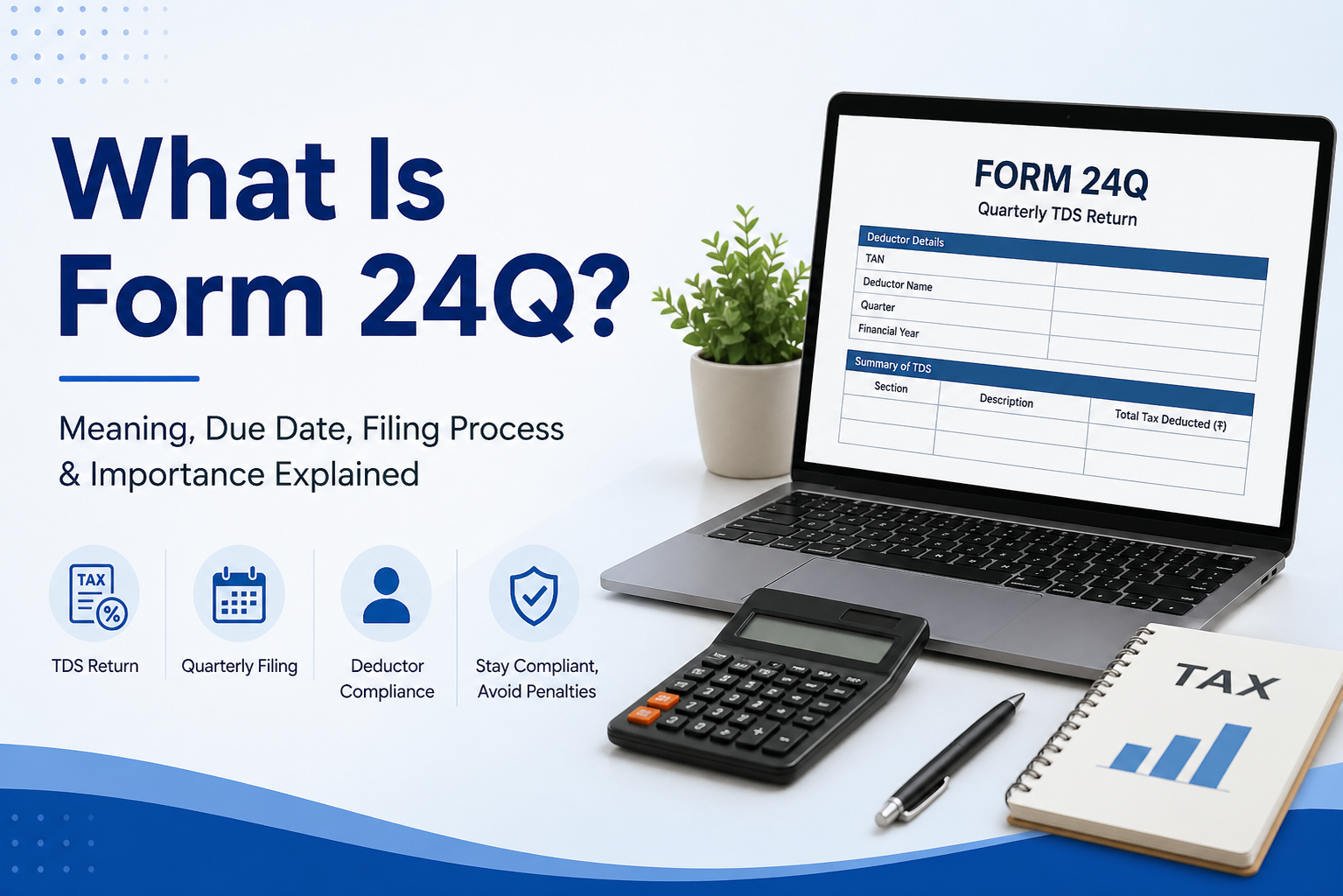
Form 24Q (Quarterly TDS Return): Meaning & Deadlines 2026

If you’re handling payroll or employee salaries, understanding Form 24Q is essential. It’s one of the most important TDS returns that employers must file every quarter in India.

In this guide, you’ll learn what Form 24Q is, how it works, due dates, and how to file it step-by-step.

Managing salary records becomes easier with an online payslip generator. It helps you create accurate payslips while keeping your TDS and Form 24Q data organized.

What is Form 24Q?

Form 24Q is a quarterly TDS (Tax Deducted at Source) return filed by employers for tax deducted on salary payments under Section 192 of the Income Tax Act.

In simple terms:
Whenever an employer deducts TDS from an employee’s salary, they must report it to the Income Tax Department using Form 24Q.

Form 24Q TDS Return Meaning

The 24Q TDS return is a statement that includes:

  • Employee salary details
  • TDS deducted from salary
  • PAN details of employees
  • Tax paid to the government

It ensures that employees get proper credit for the TDS deducted from their income.

Who Should File Form 24Q?

Any employer who deducts TDS on salary must file Form 24Q, including:

  • Private companies
  • Government departments
  • Startups and SMEs
  • Partnership firms

If you pay salaries and deduct TDS, filing Form 24Q is mandatory.

Form 24Q Due Dates (2026)

Form 24Q must be filed quarterly:

Quarter Period Due Date
Q1 April – June 31 July
Q2 July – September 31 October
Q3 October – December 31 January
Q4 January – March 31 May

Missing deadlines may result in penalties.

TDS quarterly return due dates depend on the filing quarter and must be submitted by employers on time to avoid penalties. For FY 2026, the due dates are 31 July (Q1), 31 October (Q2), 31 January (Q3), and 31 May (Q4). Late filing may result in a penalty of ₹200 per day until the return is filed.

Components of Form 24Q

Form 24Q has two main parts:

1. Annexure I (All Quarters)

Includes:

  • Deductor details
  • Challan details
  • Employee-wise TDS details

2. Annexure II (Only Q4)

Includes:

  • Complete salary breakup
  • Deductions under Chapter VI-A
  • Total taxable income
  • Final tax calculation

How to File Form 24Q Online

Follow these steps:

  1. Prepare TDS return using software or utility
  2. Validate the file using the File Validation Utility (FVU)
  3. Generate the .fvu file
  4. Upload it on the income tax e-filing portal or through TIN-NSDL
  5. Submit with DSC (Digital Signature Certificate) if required

Penalty for Late Filing

If you don’t file Form 24Q on time:

  • ₹200 per day under Section 234E
  • Maximum penalty equals total TDS amount
  • Additional penalty under Section 271H (₹10,000 to ₹1,00,000)

Simplify payroll and avoid errors in TDS reporting.

Keep your salary records organized for easy Form 24Q filing.

Generate Your Salary Slip   

Why Form 24Q is Important

  • Ensures compliance with tax laws
  • Helps employees claim TDS credit
  • Avoids penalties and notices
  • Keeps payroll records accurate

Common Mistakes to Avoid

  • Incorrect PAN details
  • Mismatch in TDS amount
  • Late filing
  • Wrong challan details
  • Not filing Annexure II in Q4

Final Thoughts

Form 24Q is a crucial part of payroll compliance in India. Whether you run a small business or a large company, timely and accurate filing of this TDS return ensures smooth tax reporting and avoids penalties.

If managing payroll feels complicated, using a simple payslip or payroll tool can make tracking salaries and TDS much easier.

NOTE: Managing salary records becomes easier with a free payslip generator, helping you keep accurate data ready for Form 24Q filing and TDS reporting.

FAQs

1) What is Form 24Q used for?

It is used to report TDS deducted on employee salaries.

2) Is Form 24Q mandatory?

Yes, for all employers deducting TDS on salary.

3) What happens if Form 24Q is not filed?

You may face penalties, interest, and notices from the tax department.

4) Can Form 24Q be revised?

Yes, you can file a revised return to correct errors.

5) What is Form 24Q?

Form 24Q is a quarterly TDS return filed by employers to report tax deducted from employee salaries under Section 192 of the Income Tax Act. It includes details like salary paid, TDS deducted, and employee PAN information, ensuring proper tax credit is recorded.

7) What happens if you don’t file Form 24Q?

If Form 24Q is not filed on time, a penalty of ₹200 per day may be charged under Section 234E until the return is filed. Additional penalties ranging from ₹10,000 to ₹1,00,000 may also apply, along with possible notices from the Income Tax Department.